
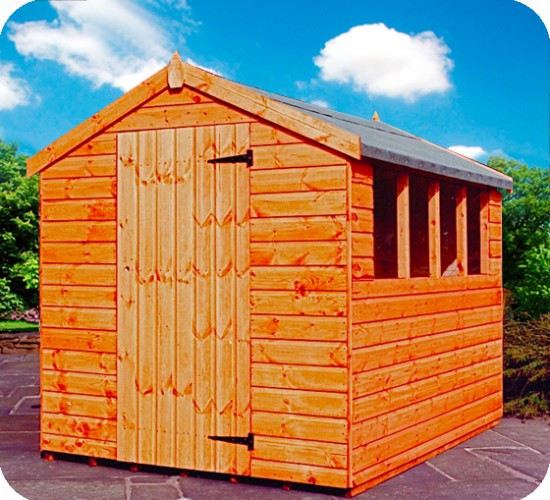
This is the Ronseal of tutorials! I took what gemini (google’s AI) said about building a shed and made a project management graph around it. I haven’t made a downloadable file yet; too many images needed. You can follow along if you want: there is a shed building task in the loadable ProjectDemo.xml file.
Gemini said
Building a shed is the ultimate DIY rite of passage. It’s essentially building a tiny house, minus the plumbing headaches and the mortgage.
Here is a high-level roadmap to get you from a patch of grass to a functional storage space.
1. The “Boring” But Crucial Stuff
Before you saw a single board, check two things:
- Local Permits: Your city or HOA might have opinions on how big or tall your shed can be.
- The Site: Pick a spot with good drainage. You don’t want your shed becoming a raft during a rainstorm.
2. Choose Your Foundation
A shed is only as good as what it sits on.
| Foundation Type | Best For… | Pros/Cons |
| On-Grade (Blocks) | Small/Medium sheds | Fast and cheap; not ideal for heavy slopes. |
| Gravel Pad | Large sheds/Workshops | Excellent drainage; requires some digging. |
| Concrete Pier | Heavy loads/Slopes | Very stable; requires more labor and concrete. |
3. The Build Process
If you’re building from scratch (rather than a kit), follow this sequence:
Step A: The Floor Frame
Build a rectangular frame using pressure-treated lumber (usually 2x4s or 2x6s). Install “joists” every 16 inches. Cover this with thick, exterior-grade plywood.
Tip: Make sure this is perfectly level. If the floor is wonky, the roof will be a nightmare.
Step B: Wall Framing
Build your walls flat on the shed floor, then “tip” them up.
- Include a top plate, a bottom plate, and vertical studs.
- Leave gaps (headers) for where your door and windows will go.
- Screw the walls into the floor and to each other at the corners.
Step C: The Roof (The Tricky Part)
Most DIYers go with a simple Gable Roof (the classic triangle shape).
- Cut a “ridge board” that runs the length of the shed.
- Cut rafters with “birdsmouth” notches so they sit securely on the walls.
- Sheath the rafters with OSB or plywood.
Step D: Siding and Trim
Install your siding (T1-11 is a popular, budget-friendly DIY choice). Add trim to the corners and around the door to hide the seams and make it look professional.
Step E: Roofing and Doors
- Roof: Install drip edges, roofing felt (underlayment), and then shingles or metal panels.
- Doors: You can build a simple “Z-brace” door using the siding cutouts from Step D.
Essential Tool Checklist
- Power: Miter saw, circular saw, and a sturdy cordless drill/impact driver.
- Precision: 4-foot level, speed square, and a chalk line.
- Safety: Eye protection (sawdust in the eye is a real mood-killer).
Project management in SALTT
Top levels
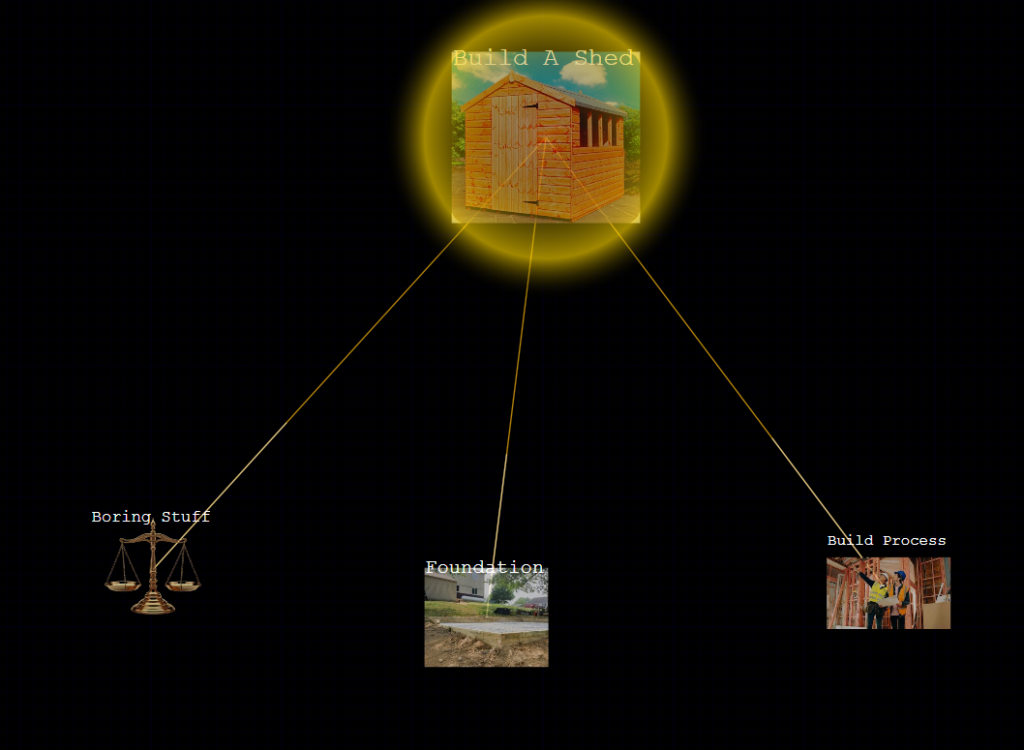
- Add the main topic of Building A Shed
- Add the 3 major sub-components – selecting meaningful topic icons.
Next level down
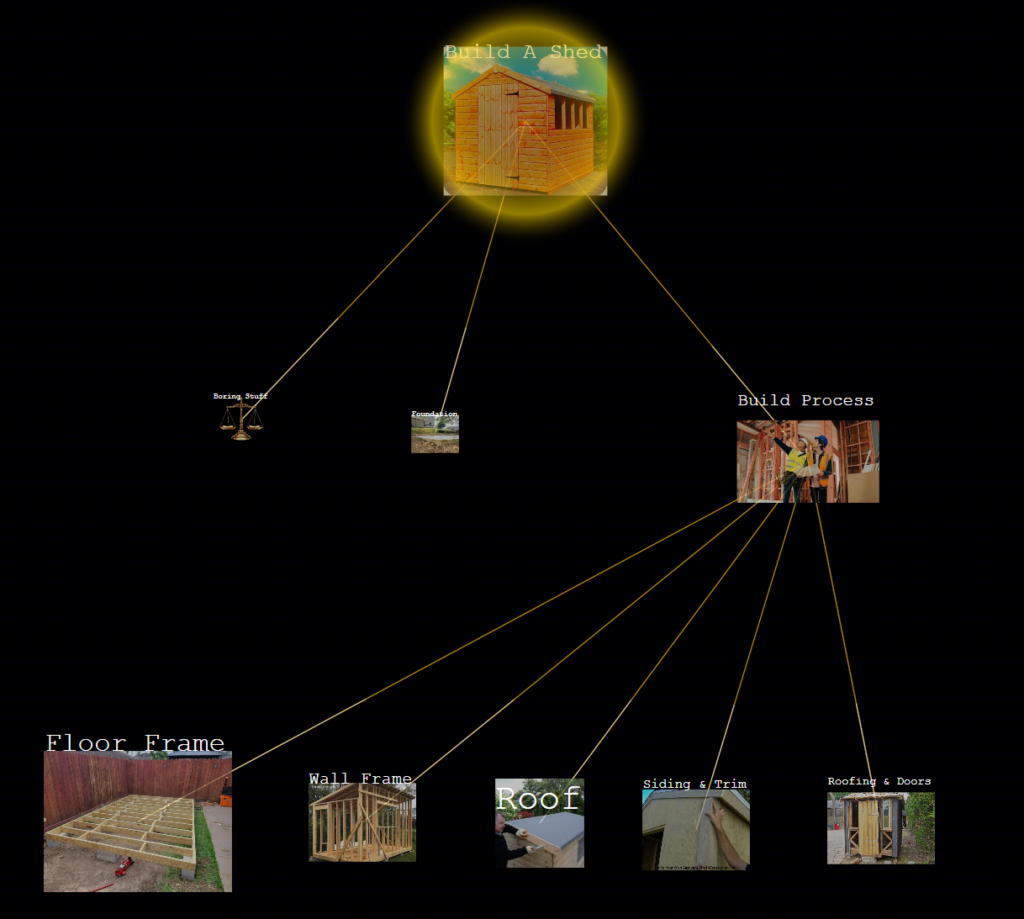
Once you have done the planning and decided on the foundation then you can mark them as complete and begin to plan the building work.
- Under the Build process add steps A to E
Scheduling the work
Estimate start and finishing dates of the steps A to E.
Drill down on the first action (the floor frame) and estimate start and finishing dates. When you start each task mark it WIP. When you finish, mark it complete.
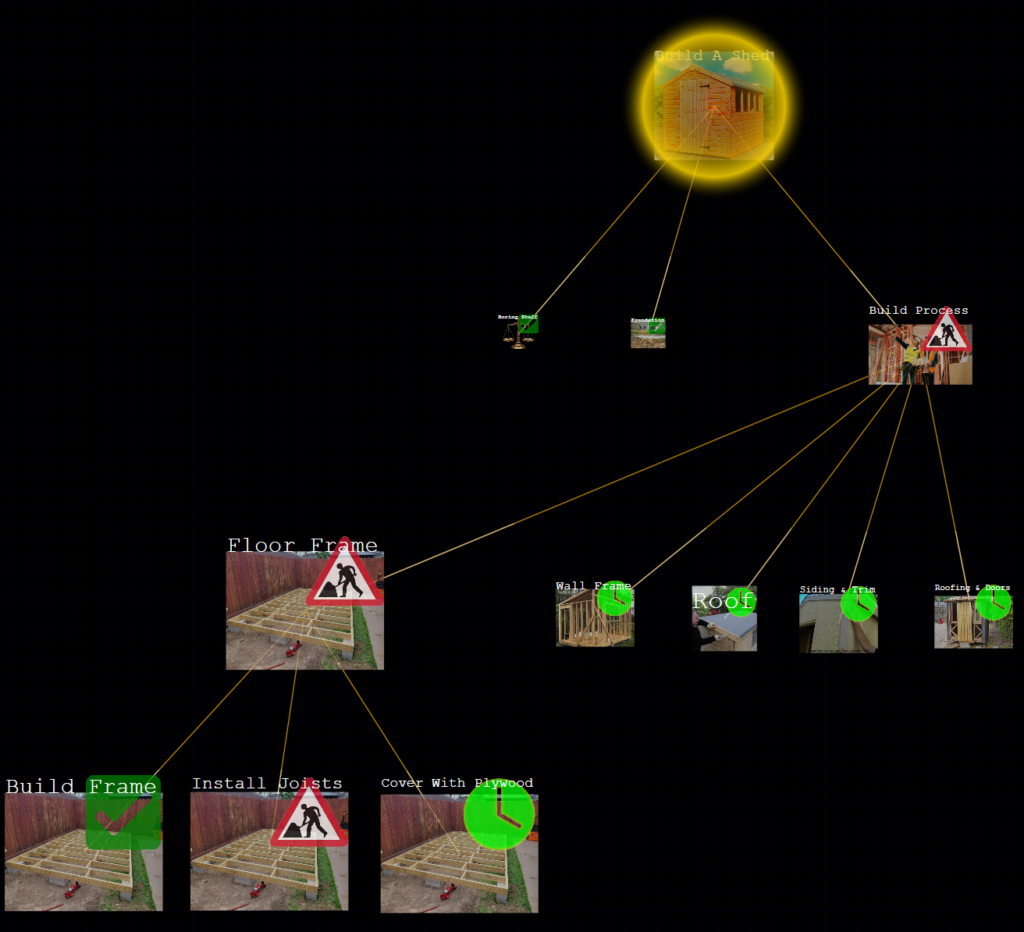
Do the same with the next action: the wall frame. Make the completed step smaller, and the current step larger.
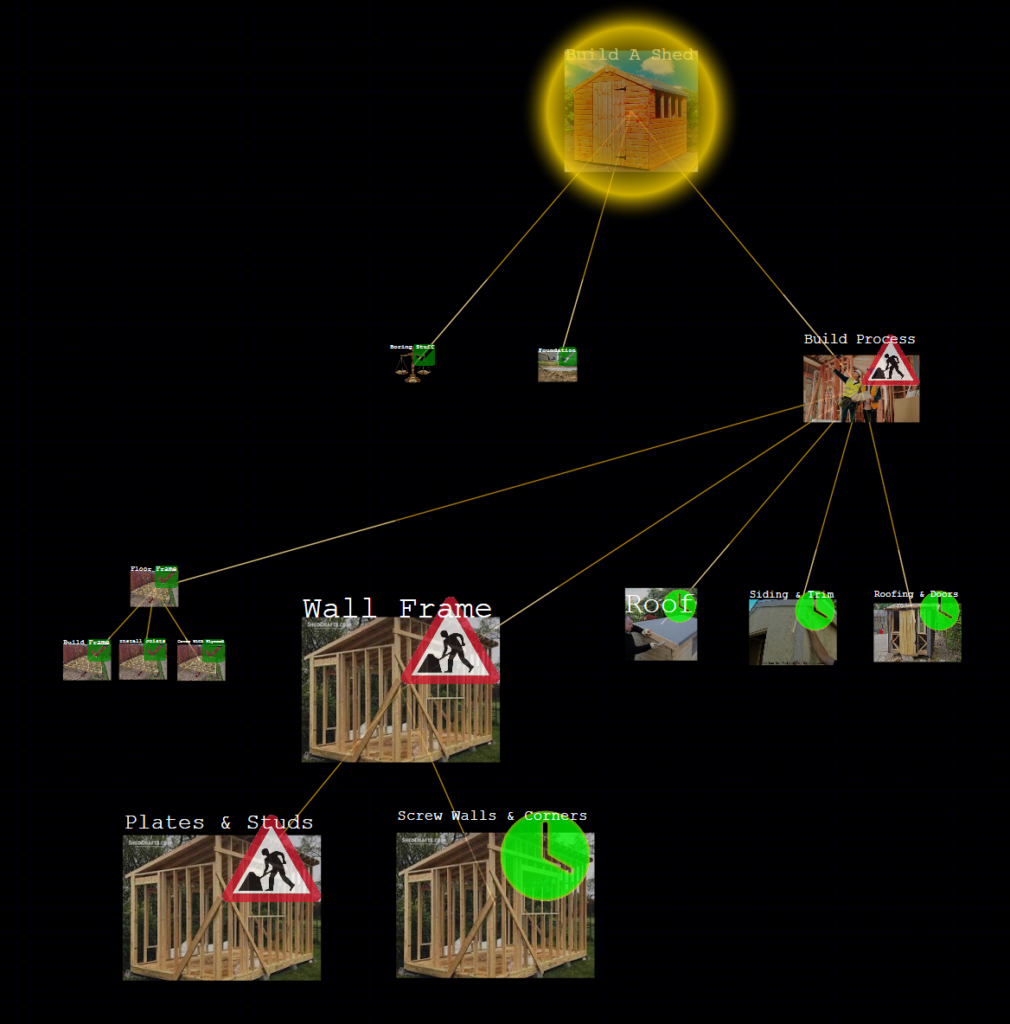
Do the same with the next action: the roof.
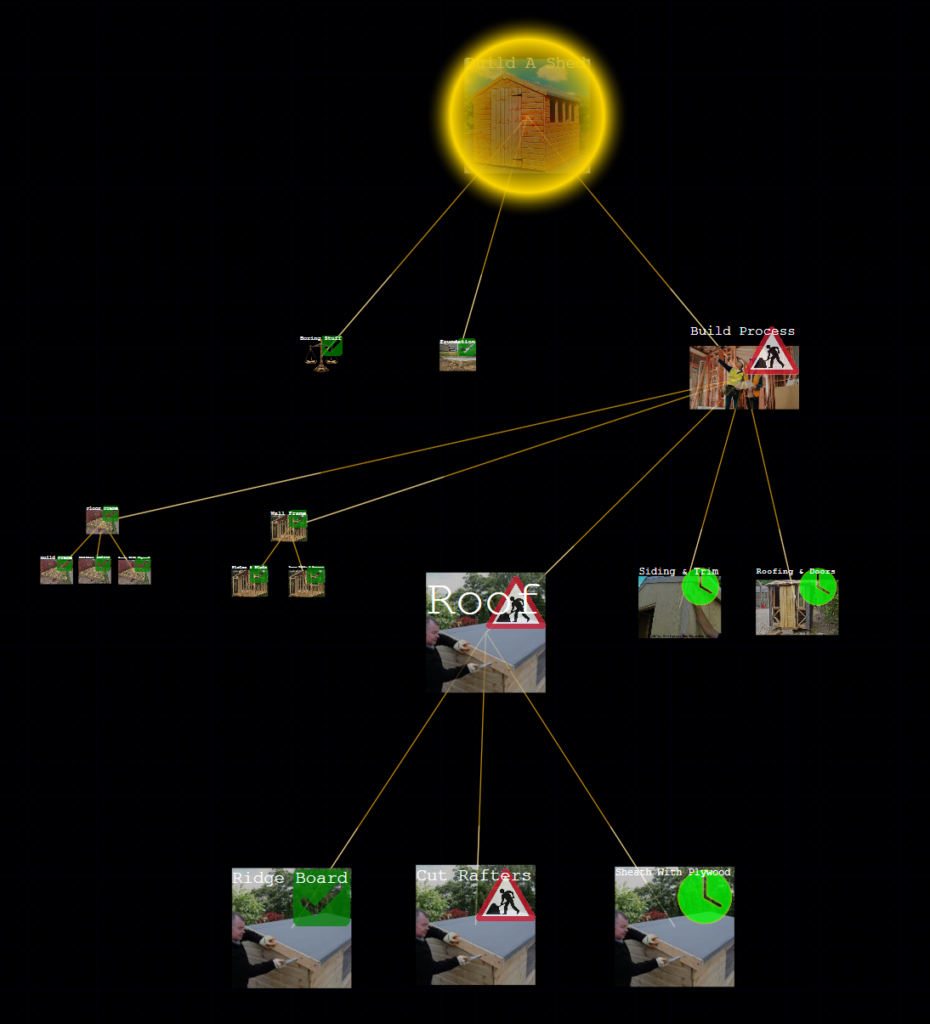
Continue until you have built your shed.
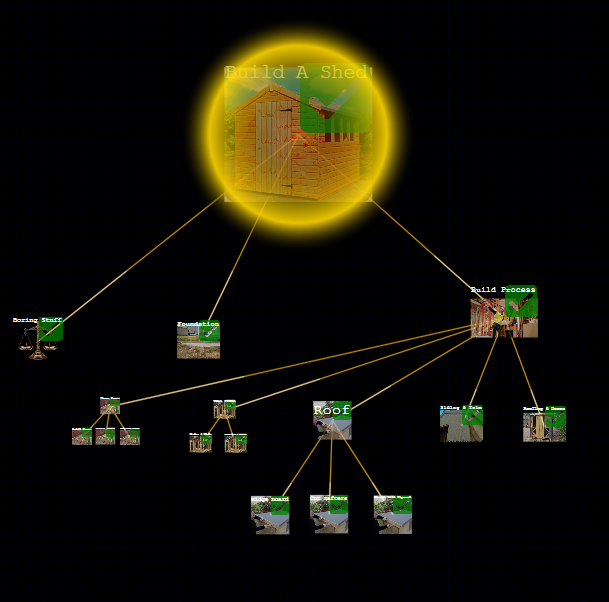
[when i get it to work!]
Here is an unnarrated screen recording of the construction; for some reason it does not record context menus or other screens it switches to, so use your imagination for now until I can get all that done.
The first recording shows setting up the project: the second shows how the project progresses.