
Central idea
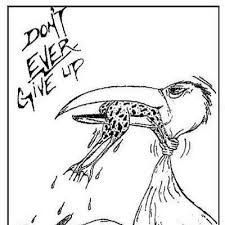
Essentially Eat That Frog is a book about overcoming procrastination and increasing performance. The central metaphor equates high resistance, but value generating, tasks to eating big ugly frogs. Eating live frogs might not be what you want to do (hence procrastination), but by eating (taking action), success will follow, or at least you have the satisfaction of knowing that is the worst thing you will do all day. Brian Tracy presents 21 easily digestible tips for going about eating that frog, gleaned from his own years of personal experience.
Eat That Frog reflects the thoughts presented by many time management authors that are concerned with doing tasks and ticking off to-do list items. The assumption is that you already know what tasks create value and which do not, and that procrastination stems from doing easy-distracting low-value tasks while avoiding the more difficult value generating tasks. Eating the frog then is about getting those higher-value tasks boxed off and totally ditching those that don’t generate any value. This is an agreeable sentiment.
This isn’t psychologically deep, but rather meant to be one of those management books that gives you a chapter and a thought for day – bite size. It’s about forming simple good habits and breaking unproductive ones: time-hygiene as it were.
Dissection
Dissecting frogs is what we did in biology class; but let’s dissect the book instead in the light of using SALTT. I won’t go chapter by chapter, but look at the overall themes. The book wasn’t written in two sections, but I’ll examine it as if it had been. The first seems to embrace what I call salience – the important things to do, the second being the alignment – the doing of them.
This book was published in 2001 when the internet and multi-media were just about getting to the late majority of users. Hence, at this time of review, the technology was nearly a quarter of a century old. We use digital systems more nowadays of course, but Tracy’s advice of “think on paper” is still dynamite. He says think of what you want and write it down, set the goal’s deadline and list everything you need to do to get there, organise it into a plan, then review and take action on them every day.
It’s a bit confusing in that he talks about the 10/90 rule, then says apply the 80/20 rule to everything. Ignore the contradiction; these are only rule-of-thumb maxims anyway! The first, the 10/90 refers to the ratio of planning to action; the second is the Pareto principle is that 80% of results are achieved through 20% of the effort (conversely the remaining 80% of the effort yields only 20% of the results). So, the point of the planning is about figuring which 20% of the things to-do, the “vital few”, will give the biggest win, concentrating on them, while ditching the “trivial many”. This is the difference between being effective at generating value, and just being busy for the sake of it. Planning stems from understanding the consequences of action, that is recognising what will have the greatest positive impact, then focusing on those key areas. Tracy poses the question, ‘What one skill, if I developed and did it in an excellent fashion, would have the greatest positive impact on my career?’ (p39) We all know that there is never enough time to do everything, but there is always enough time to do the highest value activities, which can be established by asking, ‘What can I and only I do that, if done well, will make a real difference?’ (p43), this is what I think Sharmer is referring to when he says World Class Work.
Hence, the advice is to figure out what you are uniquely good at which will provide highest-value, hone your skills around that, and eliminate the distractions. This is the essence of salience.
Given that the important and value generating activities are established, then the next set of strategies offer insights into getting things done: what I refer to as the alignment.
Getting the job done is very much assisted by creating an environment conducive to its doing, otherwise, there are myriad little barriers which are off-putting. When all the junk is out of the way and everything is laid out in order and sequence, then this preparation allows for operation without hindrance nor interruption thereby allowing you to get into your flow. Closely related is doing your homework as not knowing what you need to know before you act is a source of procrastination: ‘Continuous learning is the minimum requirement for success in any field’ (p52)
Key constraints are the limiting factors, the choke points, the clogs, the bottlenecks; these are holding you back. In project management and lean manufacturing methods these are the areas for improvement where energy is focussed upon as they are on the critical path to production. The 80/20 rule suggests that most of the constraints are your responsibility. Blaming others does not produce improvements as alleviating the wrong constraint is wasting energy solving the wrong problem. Tracy says start the day by dealing with the frog of your greatest constraint. Invariably, there are a string of constraints, so once the most pressing choke point is resolved, move onto the next.
Procrastination has many factors involved. One of the key areas is: where does the pressure to act come from? This could be reactive to external demands in order to avoid getting into trouble, or it could be internal proactive motivation to seize on opportunity. Leaders don’t wait for someone else; they put pressure on themselves. Another source of procrastination is trying to do stuff while tired or overwhelmed, trying to plough on in such situations turns counterproductive, and this raises the importance of sleep and nutrition.
On the other hand, not all procrastination is bad! Creative procrastination can be employed by saying “No!” Reject anything that is not a high-value use of your time and your life. ‘Your job is to deliberately procrastinate on tasks that are of low-value so that you have more time for tasks that can really make a difference in your life and work.’ (p86)
Finally, Tracy moves on to some hacks for overcoming the bad form of procrastination. As per the title of the book, “eating your frog”(p89) is about starting the day by doing the most difficult task first. If that frog is too big for one bite then, slicing & dicing (chunking down) is effective overcoming an overwhelming task. Alternatively the “swiss cheese” approach allocates a fixed length of time for punching a hole in a big task – a tomatoro timer is useful here – I have found that not going beyond that time limit is the key.. Another way is to assign regular preplanned time slots devoted to an important activity and discipline yourself to keep to them: this is how I do my reading and reviewing of books – no more than 15 minutes every weekday.
I personally would not adopt the final two strategies presented. I accept that a state of flow, to get going and keep going, is a tremendous feeling of productivity. But my problem with feeling a sense of urgency by repeatedly telling yourself “back to work” is a recipe for burn out. Finally, single mindedly keep at it until it is done is fine but only if a task is small enough or chunkable.
SALTT analysis
I wouldn’t expect my experience to correlate exactly with Tracy; that is fine. Apart from the contradictions, his saying that each strategy that it is among the best (p85), and quite a bit of incoherent fluff, Tracy’s personal anecdotes, metaphors, and motivational patter are the style of a book aimed at a busy manager who wants to be an effective manager.
Eat That Frog seems to me to be more about goal driven planning, and the motivation to approach tasks, under the assumption that you already have some idea of what your high-value intentions are. This is different from SALTT, which is less about setting goals and completing tasks, and more about working out what the big-picture, high-value themes of your life are in the first place. To that extent, and there is sure to be plenty of overlap. General types of approaches, such as Eat That Frog and SALTT, could be considered complementary and used well together.
But one question perturbs me: Why would you want to eat big ugly live frogs in the first place? Think of it from the frog’s perspective.